
The Software Product Discovery Phase: How to De-Risk Development Before Coding
Jumping straight into code is the fastest way to burn your development budget. Learn how a 2-4 week product discovery phase guarantees alignment, saves money, and ensures product-market fit.
Mr. Vikash Yadav
Co-Founder & CEO, BounceTech Solutions
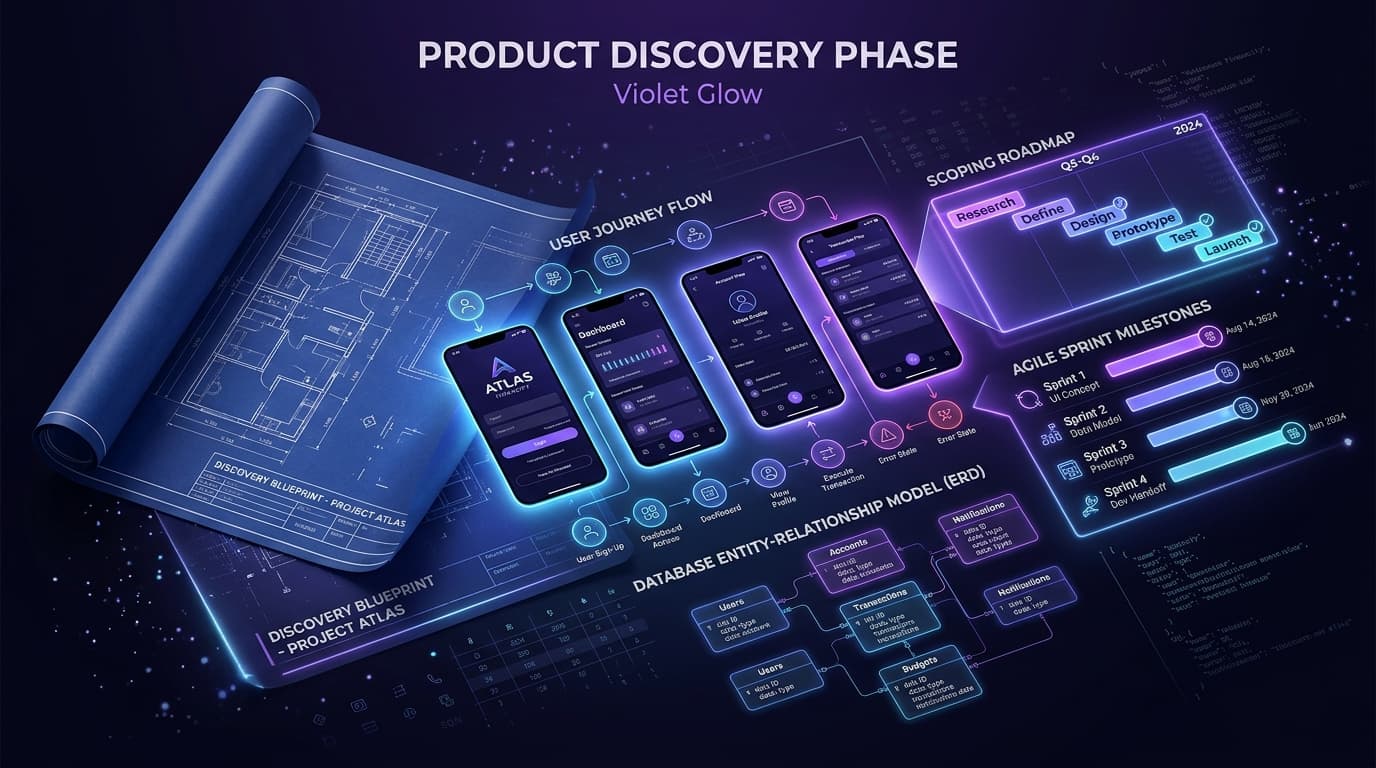
- ✓Skipping discovery leads to scope creep, causing 68% of enterprise software projects to exceed original budgets by more than 50%.
- ✓A structured discovery phase delivers 4 core assets: Interactive Figma Wireframes, Technical Architecture Blueprint, Functional SRS Document, and a Milestone Roadmap.
- ✓Validating clickable prototypes with 5 to 10 prospective users uncovers 85% of usability and workflow flaws before authoring a single line of backend code.
- ✓Discovery de-risks development by identifying third-party API dependencies, database scaling limits, and regulatory constraints upfront.
Why Jumping Straight to Code Destroys Software Budgets
The number one reason custom software projects run over budget or fail entirely is not developer incompetence; it is unclear, ambiguous requirements. When a team starts writing code based on informal briefs or vague slide decks, inevitable misunderstandings surface halfway through development. Modifying database schemas and rewiring frontend components late in the build cycle costs up to 10x more than catching those requirements during wireframing.
The 4 Pillars of a High-Impact Product Discovery Phase
A structured discovery workshop is divided into four chronological sprints:
Pillar 1: Business Logic & User Persona Mapping
Identify core user personas, map end-to-end user journeys, and define primary business KPIs (conversion rates, time-to-value, retention metrics).
Pillar 2: UI/UX Wireframing & Design Systems
Translate user journeys into high-fidelity Figma screens with interactive click-through prototypes that test usability before writing frontend code.
Pillar 3: Technical Architecture & Data Schemas
Blueprint PostgreSQL/MongoDB database models, evaluate cloud infrastructure options (AWS/GCP), specify third-party APIs (Stripe, Twilio, SendGrid), and define security compliance requirements.
Pillar 4: Sprint Roadmapping & Accurate Budgeting
Break features into Jira user stories, categorize them by MoSCoW prioritization (Must-have, Should-have, Could-have, Won't-have), and establish fixed milestones.
Key Deliverables: Prototypes, SRS & Architecture Blueprints
At the conclusion of a successful discovery phase, you hold tangible commercial deliverables:
- Interactive Clickable Figma Prototype: Tested with prospective customers and investors.
- Software Requirements Specification (SRS): Detailed acceptance criteria for every user action.
- Architecture Blueprint & Entity Relationship Diagram (ERD): Complete database models and API contracts.
- Guaranteed Milestone Budget & Timeline: Eliminating surprise cost blowouts.
De-Risking UX: Clickable Prototypes & Early User Feedback
Testing a clickable prototype with 5 to 10 prospective target customers uncovers 85% of usability and workflow flaws. If users struggle to complete a checkout flow or onboard smoothly in Figma, you fix it in 20 minutes with design tweaks, rather than spending 3 weeks refactoring code. Discover how our UI/UX Design & Prototyping Specialists craft intuitive workflows.
How Long Does Discovery Take and What Does It Cost?
A typical discovery phase costs between $3,500 and $9,000 and takes 2 to 4 weeks. This small upfront investment reliably saves $20,000 to $50,000 in prevented rework and wasted engineering payroll. Ready to de-risk your vision? Book a Discovery Scoping Session with our lead technical architects.
Software Requirements Specification (SRS) Acceptance Criteria
In a professional discovery phase, features are defined through Gherkin Given-When-Then behavioral specifications:
Feature: Multi-Factor Authentication (MFA) Login Flow
  Scenario: User initiates login from unverified IP address
    Given the user enters valid username and password
    And the current request IP is not in the trusted device ledger
    When the user submits the primary login form
    Then the system generates a 6-digit cryptographic TOTP challenge
    And dispatches an SMS verification code via Twilio
    And transitions the UI state to the MFA verification modal
    And locks account login attempts after 5 consecutive failed entries
Precise acceptance criteria eliminate developer guesswork and ensure QA engineers can write automated test assertions before coding begins.
Interactive User Testing & Usability Validation Protocol
De-risk feature development by conducting structured testing with prospective end-users:
- Unmoderated Task Completion Tests: Ask 10 target users to complete core workflows in Figma (e.g. 'Register and create your first invoice').
- Quantify Usability Friction: Track time-to-completion and error drop-off rates on every prototype screen.
- Refine Wireframes in Sprints: Iterate UX flows in hours during design rather than burning hundreds of developer hours later.
Questions People Frequently Ask
What is a software product discovery phase?
A discovery phase is a structured 2 to 4-week engagement before active programming begins. A multidisciplinary team of product managers, UI/UX designers, and software architects clarifies requirements, creates clickable prototypes, blueprints database architecture, and establishes exact project budgets.
How long does a typical software discovery phase take?
For an early-stage startup MVP, discovery takes 2 weeks. For complex enterprise workflow platforms with custom ERP/CRM integrations, discovery spans 3 to 5 weeks.
Can I take the discovery phase deliverables to another agency?
Yes. A professional discovery phase produces independent, IP-assigned assets—including Figma design systems, database ER diagrams, API schemas, and SRS documentation—that can be executed by any senior engineering team.
Written by Engineering Expert
Mr. Vikash Yadav
Vikash leads business strategy and digital product transformation at BounceTech Solutions, partnering with global startups and mid-market enterprises to engineer high-performing software systems.
Keep Reading
Related Articles & Guides
 Software Development
Custom Software Development Cost in 2026: Complete Global Pricing Guide
A comprehensive pricing guide detailing the actual costs of building custom web apps, mobile solutions, and enterprise SaaS platforms in 2026.
 Mobile App Development
 Cost in 2026: Complete Pricing & Budgeting Guide
From $18,000 MVPs to $160,000+ enterprise platforms, explore the definitive breakdown of mobile app development costs across iOS, Android, and cross-platform frameworks.
 SaaS
SaaS MVP Development: How to Plan, Build, and Launch in 90 Days
A battle-tested 90-day blueprint for founders and product teams to validate, design, develop, and launch a successful SaaS MVP.
Turn these architectural insights into reality.
Partner with BounceTech Solutions for custom software development, telemedicine apps, SaaS MVPs, and scalable cloud systems.