
How to Hire Mobile App Developers in 2026: Vetting, Rates & Agency vs Freelancer
Finding the right mobile app development team can make or break your product. Here is how CTOs and founders evaluate portfolios, run live code reviews, and choose between agencies and freelancers.
Mr. Vikash Yadav
Co-Founder & CEO, BounceTech Solutions
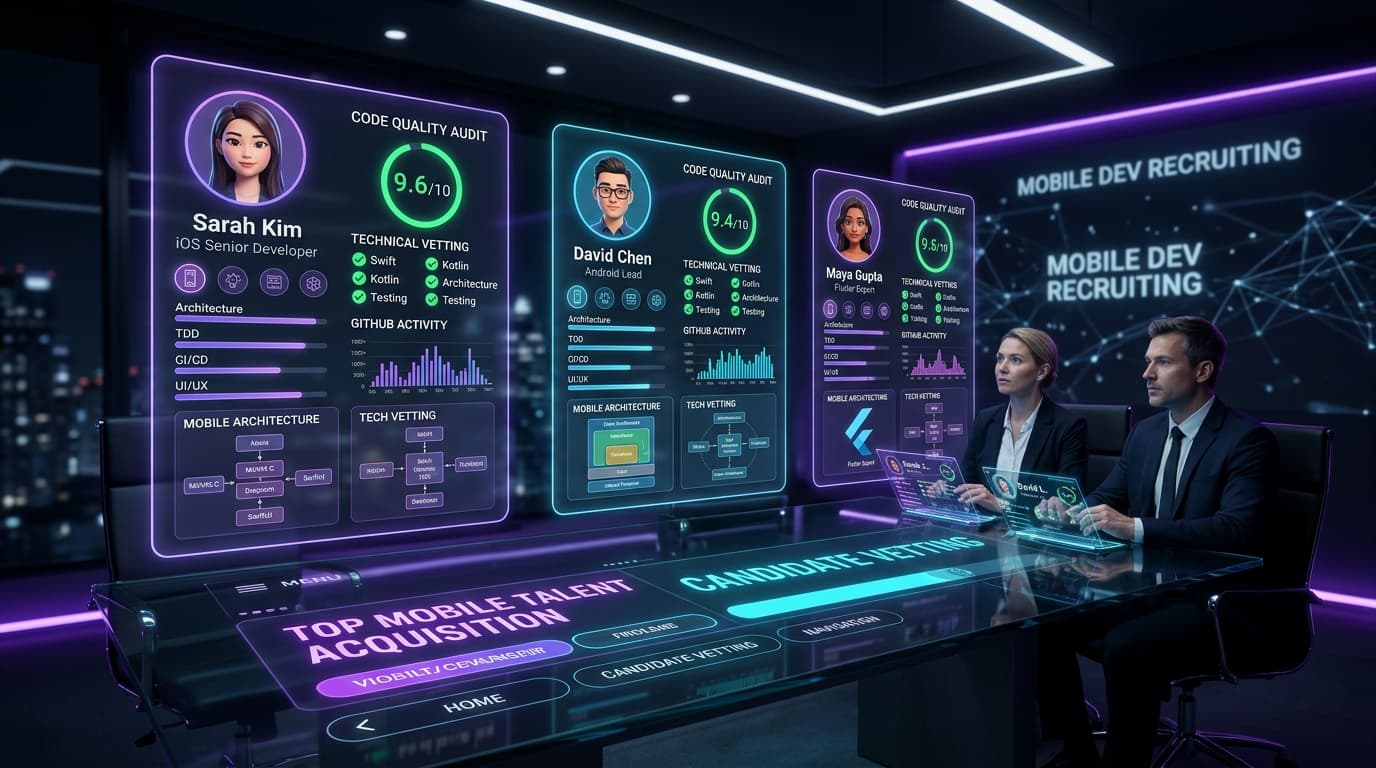
- ✓Never hire a mobile developer based solely on GitHub stars; test their live applications on actual hardware for memory leaks, battery drain, and gesture smoothness.
- ✓Freelancers are suitable for isolated, single-feature tasks ($35–$65/hr), but turn-key agencies ($45–$95/hr) provide full lifecycle support with dedicated UI/UX designers, backend architects, and QA engineers.
- ✓Ensure your contract explicitly grants 100% intellectual property (IP) assignment upon milestone completion, including raw source code, CI/CD secrets, and App Store certificates.
- ✓Ask architectural scenario questions rather than textbook syntax memorization during technical interviews.
Hiring Models: Agency vs Freelancer vs In-House Team
Building a successful mobile application requires multidisciplinary expertise: UI/UX product design, mobile frontend engineering, backend API development, cloud DevOps, and App Store compliance. When assembling your development team, you have three primary models:
| Hiring Model | Ramp-Up Speed | Average Cost | Team Composition | Accountability & Risk |
|---|---|---|---|---|
| Full-Time In-House Team | Slow (2 – 4 months to recruit) | $120k – $180k / dev / yr + benefits | Single individuals hired one by one | High overhead, severance risk if product pivots. |
| Freelance Developer | Fast (1 – 2 weeks) | $35 – $75 / hour | Solo engineer (rarely designs or does QA) | High risk of ghosting, no backup if they fall ill. |
| Dedicated Software Agency | Instant (1 – 2 weeks) | $45 – $95 / hour | Turn-key: PM, UI/UX Designer, Mobile Eng, Backend, QA | Contractual delivery guarantee, strict SLA & IP ownership. |
Mobile Developer Hourly Rates Across Global Hubs
Developer pricing varies dramatically based on regional labor markets:
- United States & Western Europe: $110 – $220 / hour. Prohibitive for pre-revenue startups seeking rapid iterations.
- India & Southeast Asia: $30 – $65 / hour. The premier global destination for high-velocity software engineering, offering unmatched price-performance ratios.
- Latin America & Eastern Europe: $45 – $85 / hour. Favorable for US-aligned working hours with established engineering hubs.
The 4-Step Technical Vetting & Portfolio Audit
Do not rely on polished resumes or slick pitch decks. Execute this 4-step technical audit before signing any contract:
- Download Their Live Apps on Real Hardware: Install 2 or 3 applications they claim to have engineered directly from the App Store and Google Play. Scroll rapidly through long lists: is there gesture stutter? Tap forms quickly: do animations glitch? Put the app in airplane mode: does it crash immediately?
- Review App Store Ratings & Update Frequency: Check if their published apps have received updates within the past 6 months. Apps with 1-star reviews citing battery drain or launch crashes reveal sloppy QA practices.
- Audit Code Quality on GitHub / GitLab: Request sample repositories. Look for clean state management (Bloc/Provider in Flutter, Zustand/Redux in React Native), clear folder separation, comprehensive test suites, and strict linting rules.
- Verify Client References: Insist on speaking directly with two past founders whose apps the team developed. Ask: "Did they deliver milestones on time?" and "How did they handle scope changes?"
Crucial Architecture Interview Questions to Ask
During technical screening, move past basic language syntax and ask real-world architectural scenario questions:
Question 1: "How do you handle memory leaks caused by stream subscriptions or event listeners?"
What to look for: Strong developers immediately discuss closing stream controllers in dispose() methods, canceling Rx subscriptions, and utilizing automated leak detection tools like DevTools Memory Profiler.
Question 2: "What is your strategy for handling Apple App Store rejections regarding guideline 4.0 (Design) or 5.1.1 (Data Collection)?"
What to look for: Experienced teams have navigated App Store review guidelines hundreds of times. They will discuss privacy manifests, explicitly stating camera/location permission rationale in Info.plist, and managing App Review appeal protocols.
Contract Essentials: IP Rights, Code Escrow & Warranties
Never start development without strict legal safeguards protecting your startup:
- 100% Intellectual Property Assignment: The contract must explicitly state that all source code, Figma design files, database schemas, and documentation are "Work Made for Hire" owned entirely by your company.
- Milestone-Based Payments: Tie payment tranches to verifiable sprint deliveries (e.g., 20% on wireframe signoff, 30% on frontend MVP build, 30% on backend integration, 20% upon App Store approval).
- 30-Day Post-Launch Bug Warranty: Require a minimum 30-day warranty window post-production launch during which the development team patches any newly discovered bugs free of charge.
Looking for a vetted, experienced mobile engineering team? Schedule an Architecture Discovery Call with the senior engineers at BounceTech Solutions today.
The 5 Crucial Technical Interview Questions & Rubric
Use this evaluation rubric during live technical screening interviews:
Question 1: "Explain how you prevent UI thread blocking during heavy JSON parsing."
Expected Answer: Candidates must explain spawning background worker threads (Flutter compute() / Isolates, or React Native worklets/JSI workers) so serialization never drops the 60fps/120fps UI render frame budget.
Question 2: "How do you handle memory leaks caused by closures in asynchronous callbacks?"
Expected Answer: Discusses weak references in Swift ([weak self]), canceling Dart StreamSubscriptions in dispose(), and using Chrome DevTools Memory Heap Snapshot comparison.
Questions People Frequently Ask
Should I hire a freelance mobile developer or a software agency?
Hire a freelancer if you have an existing technical CTO to manage them, need a minor bug fixed, or have a very small budget under $10,000. Hire an established software agency if you are building a product from scratch, as an agency provides a coordinated team of UI/UX designers, mobile engineers, backend architects, and QA testers with contractual delivery guarantees.
What should I look for in a mobile developer's portfolio?
Download their published apps directly from the Apple App Store or Google Play Store. Test for cold-start launch times, UI responsiveness during fast scrolling, offline crash behavior, user rating trends, and whether the app maintains recent OS version compatibility.
Who owns the code when outsourcing mobile app development?
You should always own 100% of the source code, design assets, and intellectual property. Ensure your agreement includes an explicit Work-for-Hire / IP Assignment clause that transfers all ownership to your company upon payment of milestone invoices.
Written by Engineering Expert
Mr. Vikash Yadav
Vikash leads business strategy and digital product transformation at BounceTech Solutions, partnering with global startups and mid-market enterprises to engineer high-performing software systems.
Keep Reading
Related Articles & Guides
 Software Development
Custom Software Development Cost in 2026: Complete Global Pricing Guide
A comprehensive pricing guide detailing the actual costs of building custom web apps, mobile solutions, and enterprise SaaS platforms in 2026.
 Mobile App Development
 Cost in 2026: Complete Pricing & Budgeting Guide
From $18,000 MVPs to $160,000+ enterprise platforms, explore the definitive breakdown of mobile app development costs across iOS, Android, and cross-platform frameworks.
 Mobile App Development
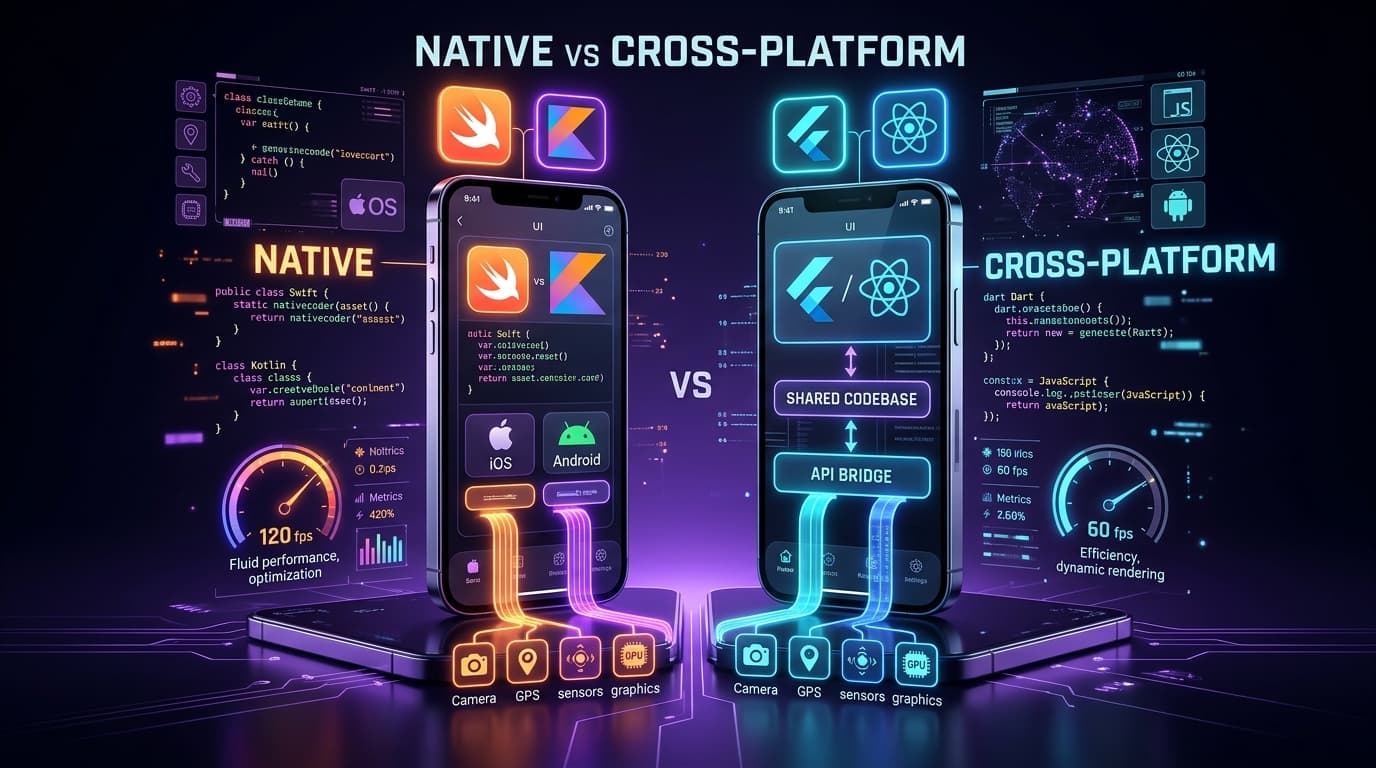
Native vs Cross-Platform App Development: Performance, Cost & Tech Guide
Should you build separate Swift and Kotlin apps, or unify under Flutter or React Native? We compare real-world frame rates, hardware integrations, and 3-year Total Cost of Ownership.
Turn these architectural insights into reality.
Partner with BounceTech Solutions for custom software development, telemedicine apps, SaaS MVPs, and scalable cloud systems.