
PWA vs Native Mobile Apps in 2026: Performance, Cost & App Store Fees
Can a Progressive Web App replace a native iOS and Android application? Explore how PWAs bypass the 30% App Store tax, reduce build costs by 50%, and where native still wins.
Mr. Prakash Yadav
Co-Founder & CTO, BounceTech Solutions
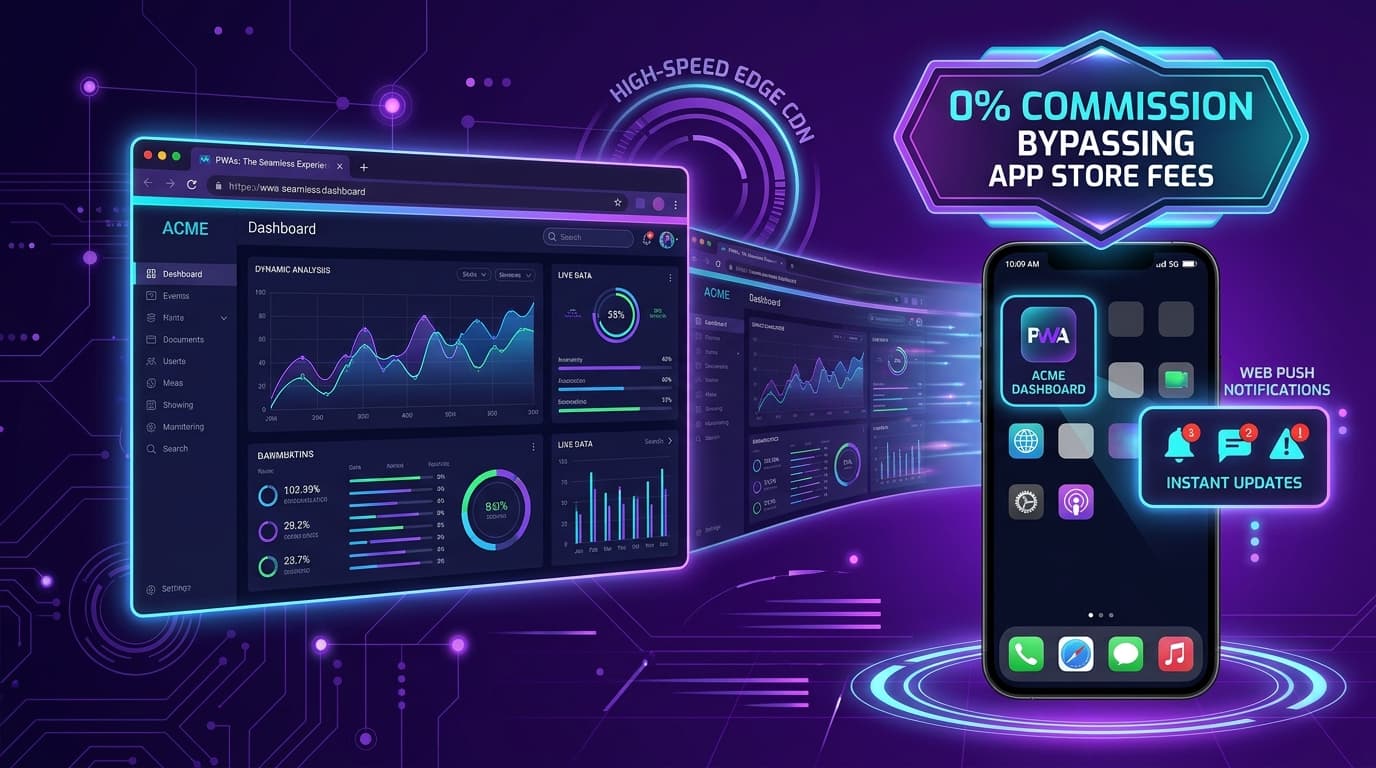
- ✓PWAs bypass Apple and Google's 15-30% in-app purchase commissions by handling payments directly through standard web checkout rails (Stripe).
- ✓With iOS 16.4+ Web Push support, PWAs can now dispatch native lock-screen push notifications when added to a user's home screen.
- ✓PWAs cut initial development and maintenance costs by 50% to 60% by leveraging a single responsive Next.js/React codebase across desktop and mobile.
- ✓Native development remains necessary for high-intensity background sensor tracking, custom Bluetooth LE firmware pairing, and 120fps 3D graphics.
What is a Progressive Web App (PWA) in 2026?
A Progressive Web App (PWA) is an application engineered using modern web standards (HTML5, CSS3, TypeScript, WebAssembly) that delivers an app-like user experience inside a mobile browser. By leveraging Service Workers, Web App Manifests, and client-side Cache Storage APIs, a PWA installs directly onto a user's home screen, operates offline, and launches in a fullscreen standalone window without URL address bars.
For modern SaaS platforms, media publishers, and e-commerce brands, PWAs represent the ultimate balance: discoverable via Google search like a website, yet fast and engaging like a native mobile app.
Feature Comparison: PWA vs. Native Mobile
Mobile web capabilities have advanced rapidly over the past three years. Here is where the platform boundaries stand in 2026:
| Feature / Capability | Progressive Web App (PWA) | Native Mobile App (Swift / Kotlin) |
|---|---|---|
| Installation Mechanism | Zero download; 1-click home screen install | App Store download (30MB – 150MB binary) |
| App Store Commission | 0% (Standard 2.9% Stripe web processing) | 15% – 30% Apple / Google in-app tax |
| Push Notifications | Supported (Android & iOS 16.4+) | Full native lock-screen support |
| Offline Functionality | Cache Storage & IndexedDB | Deep SQLite & background sync |
| Hardware Peripherals | Camera, GPS, Motion, Biometrics (WebAuthn) | Complete access (NFC, BLE, LiDAR, Background Audio) |
Bypassing the 30% App Store Tax with Web Billing
For subscription SaaS businesses and digital content providers, Apple and Google's 15% to 30% in-app purchase commission eats away up to a third of total gross revenue. By deploying a PWA, customers subscribe directly through standard web payment gateways like Stripe or Adyen at standard interchange rates (~2.9% + 30¢), delivering an immediate 12% to 27% increase in gross profit margins.
iOS & Safari PWA Capabilities (Push, Offline & Storage)
Historically, iOS Safari lagged behind Google Chrome in PWA feature adoption. However, recent iOS releases have resolved the primary roadblocks:
- Web Push on iPhone: PWAs added to the iOS home screen receive Web Push notifications identical to native apps, complete with badge counts and focus filter integration.
- Service Worker Cache Storage: HTML, CSS, fonts, and API responses are cached locally, allowing the application to load instantly without a network connection.
- Persistent IndexedDB Storage: Store hundreds of megabytes of relational data locally on the user's device for uninterrupted offline workflow.
PWA vs Native Development Cost & Time to Market
From a budgeting perspective, engineering a PWA is exceptionally capital-efficient. Instead of maintaining three separate engineering teams—Web (Next.js), iOS (Swift), and Android (Kotlin)—a single engineering pod builds one responsive Next.js Web Application that automatically serves as your mobile PWA. This reduces development timelines from 6 months down to 8-10 weeks.
The Decision Matrix: When to Choose PWA vs Native
Choose a PWA if:
- You want to eliminate the 15-30% App Store cut on digital subscriptions.
- Your product depends heavily on organic search engine discovery (SEO) to acquire customers.
- You want instant updates without waiting 24 to 72 hours for Apple App Review approvals.
Choose Native Mobile if:
- Your app requires continuous background execution (turn-by-turn navigation, geofencing).
- You are building intensive 3D games or augmented reality (ARKit/ARCore).
- You need low-level Bluetooth peripheral firmware communication. Explore our Mobile App Development Services for native and cross-platform architectures.
Service Worker Cache Strategy (Stale-While-Revalidate)
A production PWA utilizes Service Workers to deliver instantaneous offline loading:
// service-worker.js: High-Performance Stale-While-Revalidate Strategy
self.addEventListener('fetch', (event) => {
  if (event.request.mode === 'navigate') {
    event.respondWith(
      caches.match(event.request).then((cachedResponse) => {
        const fetchPromise = fetch(event.request).then((networkResponse) => {
          caches.open('dynamic-cache-v1').then((cache) => {
            cache.put(event.request, networkResponse.clone());
          });
          return networkResponse;
        });
        return cachedResponse || fetchPromise;
      })
    );
  }
});
This strategy serves cached assets in under 50 milliseconds while fetching fresh updates in the background.
Questions People Frequently Ask
Can a Progressive Web App send push notifications on iPhone?
Yes. Starting with iOS 16.4, Apple Safari supports Web Push notifications for Progressive Web Apps that have been added to the user's home screen via the Add to Home Screen prompt.
How much does it cost to build a Progressive Web App?
A high-performance PWA typically costs between $15,000 and $35,000 to develop. This is roughly 50% to 60% cheaper than engineering separate native iOS (Swift) and Android (Kotlin) codebases.
Can users find a PWA in the Apple App Store or Google Play Store?
Google Play natively supports PWAs through Trusted Web Activities (TWAs), allowing PWAs to be listed in the store. While Apple App Store is more restrictive, PWAs install directly from mobile Safari without requiring App Store review approval.
Written by Engineering Expert
Mr. Prakash Yadav
Prakash is the technical visionary and principal architect at BounceTech Solutions, specializing in mobile application development (Flutter, React Native, Swift, Kotlin), high-throughput cloud architectures, and Next.js full-stack engineering.
Keep Reading
Related Articles & Guides
 Mobile App Development
 Cost in 2026: Complete Pricing & Budgeting Guide
From $18,000 MVPs to $160,000+ enterprise platforms, explore the definitive breakdown of mobile app development costs across iOS, Android, and cross-platform frameworks.
 Mobile App Development
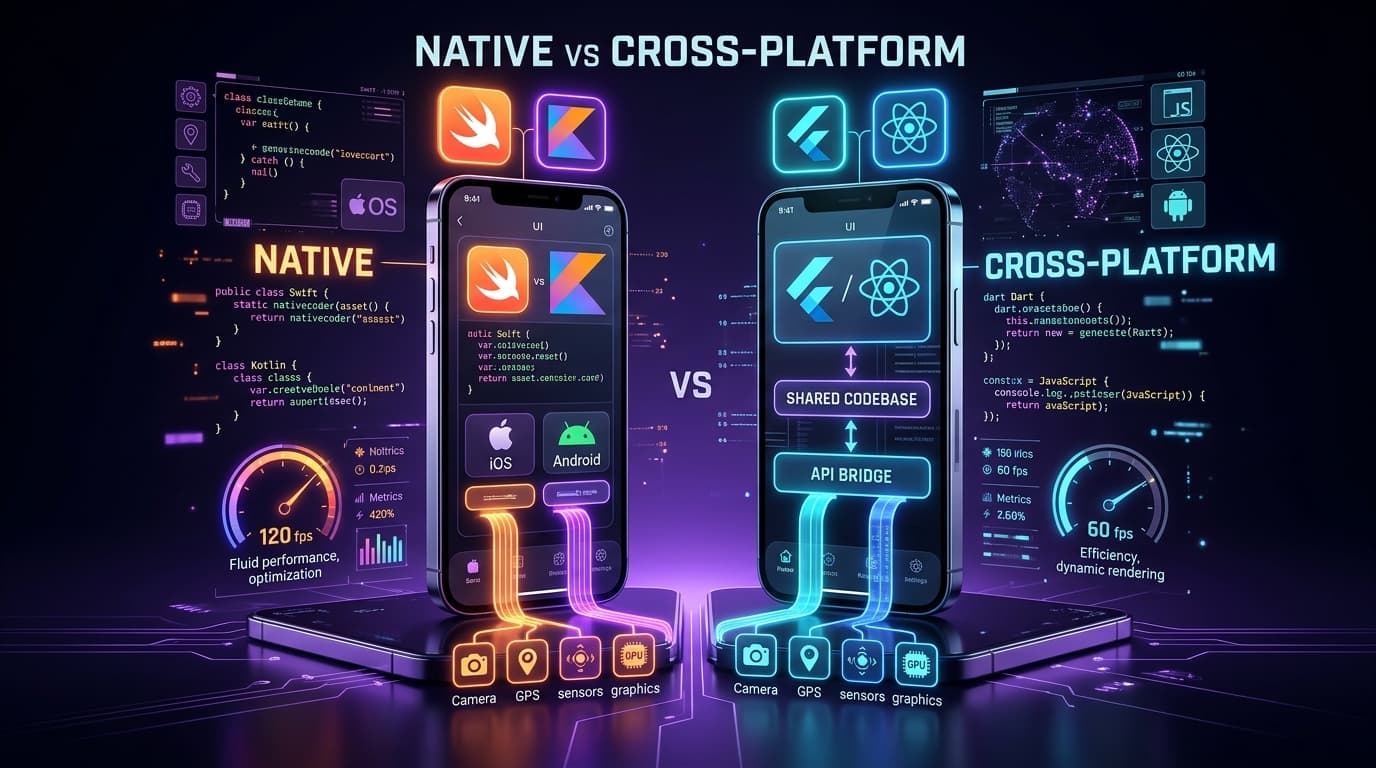
Native vs Cross-Platform App Development: Performance, Cost & Tech Guide
Should you build separate Swift and Kotlin apps, or unify under Flutter or React Native? We compare real-world frame rates, hardware integrations, and 3-year Total Cost of Ownership.
 Web Development
Next.js vs React in 2026: Which Framework Should You Choose for Your Business?
An in-depth technical and business comparison between Next.js and pure React to help you pick the right framework for scale and SEO.
Turn these architectural insights into reality.
Partner with BounceTech Solutions for custom software development, telemedicine apps, SaaS MVPs, and scalable cloud systems.