
App Store Optimization (ASO) in 2026: How Developers Rank on iOS & Google Play
Building a great app is only half the battle; getting discovered in the App Store requires strategic ASO. Learn how Apple and Google rank apps and how to drive organic downloads.
Mr. Vikash Yadav
Co-Founder & CEO, BounceTech Solutions
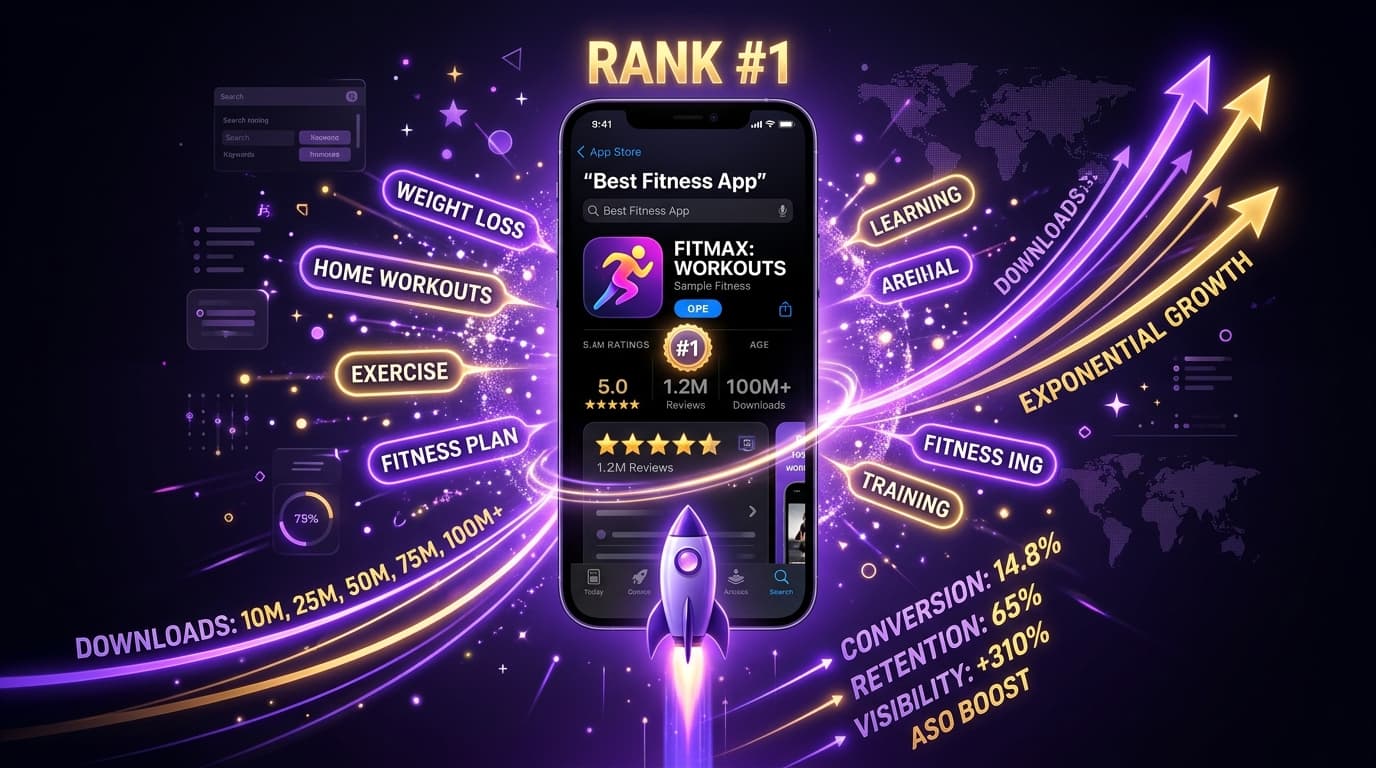
- ✓Apple's search algorithm indexes the App Name (30 chars), Subtitle (30 chars), and hidden Keyword Field (100 chars); repeating keywords wastes valuable character slots.
- ✓Google Play indexes keywords naturally from the Title, Short Description, and Long Description (up to 4,000 characters) similarly to Google Web Search.
- ✓Technical health directly dictates store rankings: maintaining an ANR (Application Not Responding) rate below 0.47% and crash rate below 1.09% is mandatory for Google Play search visibility.
- ✓Apple Custom Product Pages (CPPs) allow you to create up to 35 contextual landing pages tailored to specific keyword intents.
The Core Mechanics of App Store Optimization
App Store Optimization (ASO) is the mobile equivalent of Technical SEO. Over 65% of all iOS and Android app downloads originate directly from keyword search queries inside the Apple App Store and Google Play Store. If your app is not ranking in the top 3 results for your target high-intent commercial keywords, you are missing out on organic, zero-CAC user acquisition.
Apple App Store Algorithm: Metadata Rules & Keyword Indexing
Apple uses a strict, closed metadata indexing system. The algorithm indexes exactly three fields:
- App Title (30 Characters): The highest algorithmic weight. Combine your brand name with your primary high-volume keyword (e.g., "RydeFlow: Ride Sharing & Cabs").
- Subtitle (30 Characters): Secondary weight. Use supporting functional keywords highlighting core value props.
- Keyword Field (100 Characters): Hidden from public view. Separate keywords strictly with single commas and no spaces (e.g., "cab,taxi,ride,carpool,driver,booking"). Never duplicate words already used in the Title or Subtitle.
Google Play Store Algorithm: Density, Vitals & Semantic Indexing
Google Play indexes apps much like Google Search, using natural language processing (NLP) across your entire store listing:
- Title (30 characters) & Short Description (80 characters): Carry primary algorithmic weight.
- Long Description (4,000 characters): Aim for a 2% to 3% natural keyword density for primary and long-tail terms. Avoid unnatural keyword stuffing which triggers store algorithmic penalties.
Visual Conversion Optimization: Icons, Screenshots & Preview Videos
Ranking #1 is worthless if impressions fail to convert into downloads. Optimize your visual conversion funnel:
- The First 3 Screenshots: Over 70% of users make download decisions based purely on the first three screenshots visible in search results without scrolling. Ensure each features a bold, readable value proposition banner.
- Localized App Store Listings: Translating screenshots and descriptions into Spanish, German, Japanese, and French increases global downloads by up to 120%.
How Crashes and ANRs Silently Kill Your App Store Rankings
Google Play enforces strict Android Vitals bad behavior thresholds. If your app's user-perceived crash rate exceeds 1.09% or Application Not Responding (ANR) rate exceeds 0.47%, Google Play will automatically suppress your store visibility, remove you from category rankings, and show a warning banner to prospective users stating that your app frequently crashes. Maintaining technical health through continuous profiling is mandatory for organic growth.
Custom Product Pages (CPPs) & Contextual Store Fronts
Apple Custom Product Pages (CPPs) allow you to create up to 35 tailored variations of your App Store page. Each CPP features custom screenshots, promotional text, and preview videos mapped to specific advertising campaigns or keyword intents, boosting paid and organic conversion rates by up to 35%. Explore our App Store Publishing & Compliance Services for turnkey optimization.
Apple Keyword Field 100-Character Mathematical Optimization
Every character in Apple's hidden 100-character keyword field must be engineered for maximum keyword combinations:
- No Spaces After Commas: Write
cab,taxi,ride,driver(22 chars) instead ofcab, taxi, ride, driver(25 chars). Those 3 saved characters yield space for another keyword. - No Plural Duplication: Apple's algorithm automatically handles plurals. Storing both
carandcarswastes 4 valuable characters. - No Category Names: Apple automatically indexes your app's assigned category (e.g. "Travel" or "Finance"). Never include category words in your keyword field.
App Store A/B Testing & Icon Conversion Psychology
A 2% improvement in store page conversion rate can double organic download volume through algorithm momentum:
- Apple Product Page Optimization (PPO): Test up to three distinct app icon treatments and screenshot sequences simultaneously against a live control group directly inside App Store Connect.
- The First 5-Second Test: Over 60% of app store visitors do not read descriptions; they scan the primary title and first three screenshot headers. Ensure typography is readable at thumbnail dimensions without zooming.
- Localized Graphic Assets: Translate screenshots into Spanish, German, Japanese, and French to capture international category rankings.
Questions People Frequently Ask
What is the most important factor in App Store Optimization?
For Apple App Store, the App Title and Subtitle carry the highest keyword weight, followed by download velocity. For Google Play, Android Vitals (crash rate & ANR thresholds) combined with keyword density in descriptions determine ranking.
How often should I update my app store metadata and keywords?
Metadata should be iterated every 4 to 6 weeks based on conversion rate analytics and seasonal search trends. Avoid changing your App Title frequently as this disrupts existing algorithmic authority.
Does app performance and crash rate affect App Store rankings?
Yes. Google Play explicitly deprioritizes apps whose user-perceived crash rate exceeds 1.09% or ANR rate exceeds 0.47%. Apple similarly demotes apps with high crash frequencies in organic search results.
Written by Engineering Expert
Mr. Vikash Yadav
Vikash leads business strategy and digital product transformation at BounceTech Solutions, partnering with global startups and mid-market enterprises to engineer high-performing software systems.
Keep Reading
Related Articles & Guides
 Mobile App Development
 Cost in 2026: Complete Pricing & Budgeting Guide
From $18,000 MVPs to $160,000+ enterprise platforms, explore the definitive breakdown of mobile app development costs across iOS, Android, and cross-platform frameworks.
 Mobile App Development
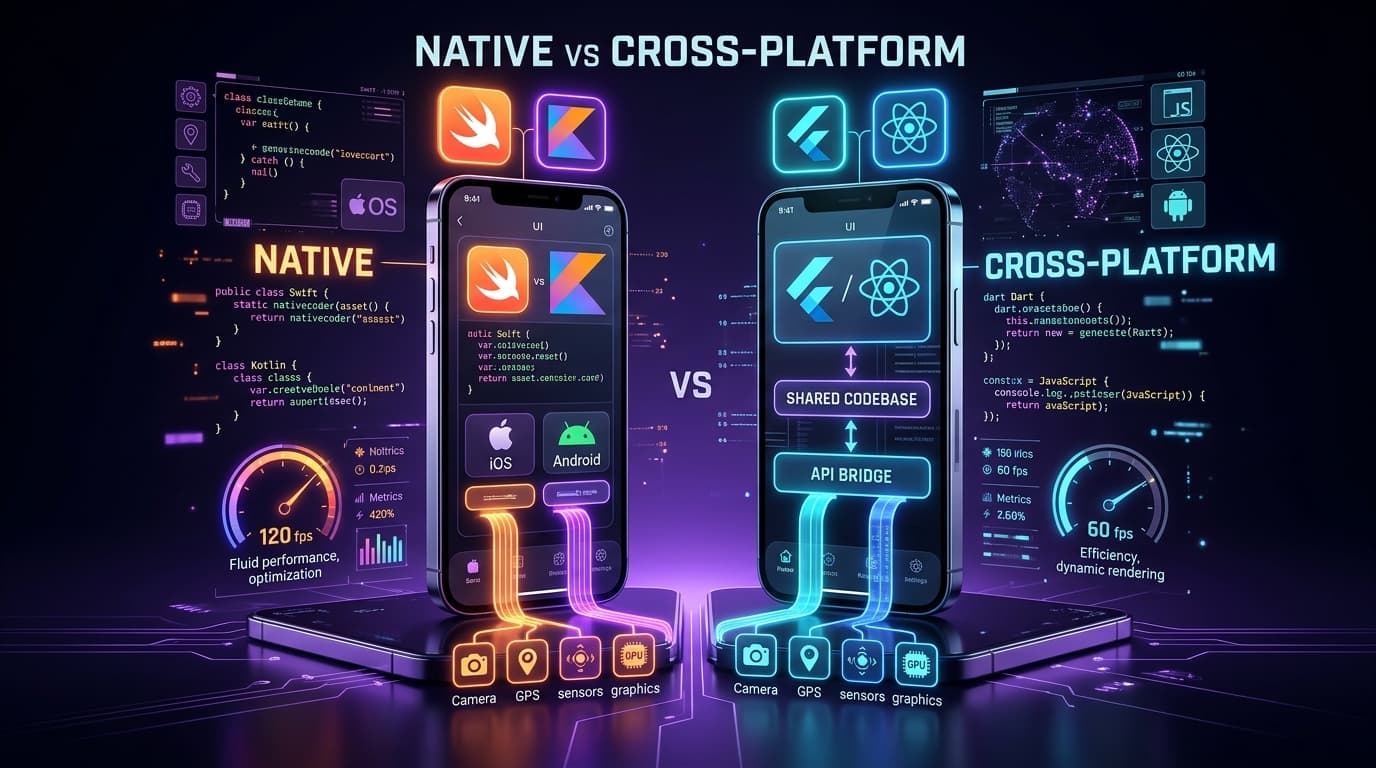
Native vs Cross-Platform App Development: Performance, Cost & Tech Guide
Should you build separate Swift and Kotlin apps, or unify under Flutter or React Native? We compare real-world frame rates, hardware integrations, and 3-year Total Cost of Ownership.
 Technical SEO
 Checklist for Business Websites: The Complete 2026 Developer & Founder Guide
A developer-first technical SEO guide covering crawlability, canonical URL alignment, Core Web Vitals optimization, and rich schema markup for modern web applications.
Turn these architectural insights into reality.
Partner with BounceTech Solutions for custom software development, telemedicine apps, SaaS MVPs, and scalable cloud systems.